Assertion (A): The theory and hypotheses of Argyris suggest no relationship between personal development of the individual and the organisational situation.Reason (R): The principles and the characteristics of a formal organisation, in the opinion of Argyris, are incongruent to the needs of adult human beings.
A. A and R are true and R is the correct explanation of A
B. A and R are true but R is not the correct explanation of A
C. A is true but R is false
D. A is false but R is true
Select an option to see the answer and solution.
The leadership theory given by G. R. Terry emphasised on
A. willingness to accept
B. force to influence people
C. compulsion to influence people
D. All of the above
Select an option to see the answer and solution.
OD is based on certain values that are important for the development of organisations as open and proactive systems. OD fosters a set of specific values 'OCTAPACE'. 'OCTAPACE' refers to
A. 1, 2, 3, 4, 9, 13, 11, 6
B. 1, 12, 3, 13, 9, 4, 11, 6
C. 1, 12, 3, 13, 9, 7, 10, 5
D. 1, 2, 3, 4, 8, 7, 11, 6
Select an option to see the answer and solution.
Which is the method of conflictmanage ment?
A. Conflict Resolution Method
B. Conflict Reduction Method
C. Conflict Stimulation Method
D. None of these
Select an option to see the answer and solution.
The ultimate goal of organisational development is to
A. structure the organisational environment so that managers and employees can use their developed skills and abilities to the fullest
B. reduce the levels of uncertainty in managerial decision-making throughout the organisation
C. create an internal environment which is conducive to self expression
D. None of the above
Select an option to see the answer and solution.
Match the following:
List-I (Theory) List-II (Year)
a. Theory X and Theory Y
1. 1960
b. Howthorne studies
2. 1939
c. Neo-classical Behavioural Science Approach
3. 1930
d. Organisational efficiency
4. 1947
5. 1950
A. a-1, b-2, c-3, d-4
B. a-2, b-3, c-4, d-1
C. a-3, b-5, c-4, d-1
D. a-4, b-1, c-3, d-2
Select an option to see the answer and solution.
Who is the developer of 'Two Factors theory' of Motivation?
A. Herzberg
B. Lawless, David. J.
C. A. H. Maslow
D. Porter, Lyman W. and Hackman
Select an option to see the answer and solution.
Which statement is correct?
A. A project organisation is a temporary arrangement because it has only a one time task, but it involves fairly long period
B. Product divisionalisation is called for when emphasis is to be placed on a product
C. A functional structure often develops in small organisations around individual personalties who wish to give shape to their ambitions
D. All of the above
Select an option to see the answer and solution.
Which of the following communication networks is more effective vis-a-vis speed and accuracy of performance?
A. Circle
B. Wheel
C. Chan
D. None of these
Select an option to see the answer and solution.
Which is the type of communication in small group?
A. Centralised flow with feedback
B. Chain flow with feedback
C. Circular flow with feedback
D. All of the above
Select an option to see the answer and solution.
Which of the following pairs of the administrative thinkers have described the scientific management as the 'Physiological Organisation Theory'?
A. Simon and Argyris
B. Simon and Likert
C. March and Bernard
D. March and Simon
Select an option to see the answer and solution.
Match the following:
List-I (Authors) List-II (Books)
a. Robert A. Baron
1. Behaviour in Organisation
b. Thibaut Kelley
2. The Social Psychology of Groups
c. Goodman and Schminke
3. Understanding Groups in Organisation
d. Syillagyi and Wallace
4. Organisational Behaviour and Performance
5. Management
A. a-4, b-3, c-2, d-5
B. a-5, b-1, c-3, d-2
C. a-1, b-2, c-3, d-4
D. a-1, b-3, c-2, d-4
Select an option to see the answer and solution.
Match the following:
List-I (Authors) List-II (Their Publications)
a. Simmons, John
1. Communication
b. Stanton
2. How to Audit Communications
c. Jones, Alum
3. Partnering the supervisor
d. Likert, Rensis
4. Motivation
5. Directing
A. a-3, b-1, c-4, d-2
B. a-1, b-2, c-3, d-4
C. a-1, b-3, c-2, d-4
D. a-5, b-1, c-4, d-3
Select an option to see the answer and solution.
Match the following:
List-I (School) List-II (Period)
a. Classical theory
1. 1890-1930
b. Behavioural theory
2. 1930-1960
c. System theory
3. 1960-upto date
d. Contingency theory
4. 1965
A. a-1, b-4, c-3, d-2
B. a-3, b-1, c-4, d-2
C. a-1, b-2, c-3, d-4
D. a-3, b-2, c-1, d-4
Select an option to see the answer and solution.
George White is demonstrating resistance to the new operating methods incorporated at the organization he works for. Which of the following is an action that Mr. White would be likely to engage in?
A. Promotion of the new methods to coworkers
B. Acquisition of skills pertinent to the new methods
C. Attempting to delay the change
D. Discussion of the new methods and the job requirements with supervisors
Select an option to see the answer and solution.
The . . . . . . . . is characterized by highly routine operating tasks achieved through specialization.
A. matrix organization
B. bureaucracy
C. simple structure
D. team structure
Select an option to see the answer and solution.
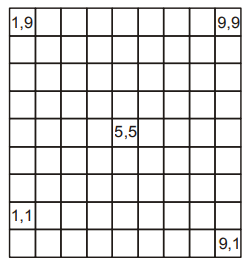
Given
The above graph is an example of
A. Planning
B. The Managerial Grid
C. Conflict
D. Directing
Select an option to see the answer and solution.
Which of the following is not identified that managers can create a more ethical culture?
A. Visibly reward ethical acts
B. Set aggressive performance goals
C. Communicate ethical expectations
D. Provide protective mechanisms
Select an option to see the answer and solution.
Which of the following statements is/are true?
A. The difference, between punishment and negative reinforcement is that in the former case, a noxious consequence is applied to decrease the frequency or strength of an undesired behaviour, whereas inthe latter, a noxious consequence is withheld when a desired, behaviour is exhibited
B. Punishment can have undesirable side effects if administered too frequently
C. Negative reinforcement increases the frequency and strength of a desired behaviour by making it contingent upon the avoidance of undesirable consequences for the employee
D. All of the above
Select an option to see the answer and solution.
One of the assumptions of Theory Y is as follows
A. the normal human being intrinsically dislikes work and attempts of avoid it if the can do so
B. human beings have a hierarchy of needs
C. people are governed by self-direction and self-control
D. None of the above
Select an option to see the answer and solution.